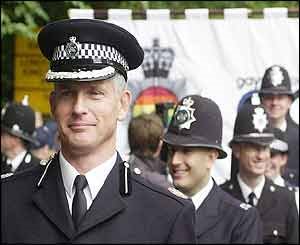
Blair Anderson, on the hustings 'canvassing for opinion'

Blair Anderson, on the hustings 'canvassing for opinion'
affiliation: http://facebook.com/mildgreens

Thursday, August 16, 2007

Alcohol, Drugs, Sandals and Footwear.


Media Release MildGreens


Alcohol, Drugs, Sandals and Footwear.


The ADANZ concerns of cannabis problems amongst young people must be laid at the feet of governments abject failure to remove the double standards surrounding drug and alcohol policy. Cate Kearney of the Alcohol Drug Helpline 'user data' highlights what happens when we ask people questions who are suffering the ignominy of prohibitions constraints on informed consent, knowledge and self determination.

When we remove self will from the equation 'then we get problems' says Blair Anderson of the MildGreens, commenting on the recent ADANZ Helpline report on Scoop and InfoNews

Young people are particularily at risk, and here we are amplifying alienation in a society increasingly 'anti-youth'. The youth response to Alcohol Drug Helpline indicates a pattern of labelling teenage behavours, particularily by family and where the existing 'Alcohol Drug' law is so clearly unhelpful, indeed history and evidence shows it to be counter productive.


The distinction between legal and illegal drugs is not justifiable under any scientific, logical or public health criteria and is purely an artefact of quirks in our social and political history.


Ms Kearney and others shouldn't be surprised at 'normal' youth attitudes to cannabis, it is entirely predictable. What should alarm folk is the prevalent and problematic alcohol consumption with its causative linkage to known health outcomes. Compared to cannabis for which the harms have been long been largely overstated, alcohol, by comparison is an 'all organ' poison. Previous media release (15 April 2007) by Associate Minister of Health, Jim Anderton attributes alcohol costs "in the billions' yet the same release regarding funding and commitment to the Alcohol Drug Helpline says "Although ADANZ hosts the service, funding is a joint arrangement between the Alcohol Advisory Council (ALAC) of New Zealand and the Ministry of Health.".


The MildGreens draws the Honorable Minister and his Health Ministry to this statement from the UN accredited drug policy NGO TRANSFORM:


Both tobacco and alcohol are often talked of as if they are not 'real drugs' - or sometimes not drugs at all, underlined by the frequent use of daft phrases such as 'alcohol and drugs', which is about as logical as saying 'orange juice and drinks' or 'sandals and footwear'. Obviously both alcohol and tobacco are powerful psychoactive drugs; potentially highly toxic, addictive and associated with high mortality rates. Were they to be classified under the current policy regime (the Misuse of Drugs Act 1971 [1975 in NZ. ed.]) they would certainly be class A or B. / TRANSFORM


Kearney also validates that when it comes to effective health promotion nothing has changed since the previous year, begging the question "why is cannabis law so draconian when the policy is so ineffectual in either of its design goals, limiting use or in moderating harms real or otherwise?"

"The role of government should be to prevent the most chaotic drug users from harming others – by robbing or by driving while drugged, for instance – and to regulate drug markets to ensure minimum quality and safe distribution. The first task is hard if law enforcers are preocupied with stopping all drug use; the second, imposible as long as drugs are illegal." [The Economist, editorial. From Issue entitled: 'Time to legalise all drugs' 28.06.01]

Blair Anderson
http://blairformayor.blogspot.com/
ph (643) 389 4065 cell 027 265 7219

Wednesday, August 15, 2007

Canvassing 'Our Water' a New Group on the ECAN Hustings!

New group aims to stall Central Plains Water project

A new bid has surfaced to sink the huge Central Plains Water (CPW) project.

A new group called Save Our Water has formed on an anti- CPW platform which also aims to close the tap on commercial use and abuse of water.

Party spokesman Ryan Garland, one of its four candidates running in the upcoming Environment Canterbury election, said water issues had become too important to ignore in Canterbury.

"There would seem to be growing awareness about the pending threat to our water quality and quantity but there needs to be more action and more policy put in place – and Canterbury needs to vote for people who will actually do that," said Garland.

Garland, a Telecom sales representative, is new to politics, as are his co-campaigners Lois Griffiths, David Sutherland and Richard Tindall, all of Christchurch.

Although the party aims to defeat the $400 million irrigation scheme for central Canterbury, its water concerns go beyond it. The party wants to bring in tighter regulations and protections around water use overall.

Garland said lax standards and attitudes, as well as the proliferation of large-scale dairying, posed a mounting threat to water quality and quantity.

This week, Canterbury's medical officer of health, Dr Alistair Humphrey, said there were huge unexamined health impacts related to the project, including the possible explosion of waterborne diseases.

Scientists have warned that the project – which would irrigate 60,000ha of farmland between the Waimakariri and Rakaia rivers – could exacerbate already growing incidences of cryptosporidium and campylobacter.

Save Our Water has three key policies aimed at curbing water depletion and pollution:

* To introduce mandatory metering for all water permits.

* To impose a moratorium on future consents, until long-term implications are better understood.

* The implementation of a "resource rental use" policy, which would require groups drawing large amounts of water from the river to pay a fee.

New Zealand news on Stuff.co.nz

Monday, August 6, 2007

Top Cannabis Cop for Mayor of London

Top "cannabis" Cop for Mayor of London.


Former colleague of Detective Chief Super Eddie Ellison and front for the Brixton initiative on cannabis (and Gay Policeman) Brian Paddick has been nominated as the Liberal Democrat mayoral candidate for London. Paddick recently retired at the top of his carrer as Metropolitan Police deputy assistant commissioner.


Blair Anderson, Christchurch Mayoral hopeful welcomes the news that London is at the cutting edge in its consideration for Mayor.


Eddie Ellison (deceased) shared with me several years ago as we drove form Rotary to Rotary how Paddick fronted the cannabis law reform on the street. Eddie highlighted Paddick's communication skills and empathy with his district (Lambeth).


Eddie lived to see cannabis reform movement become mainstream. The Police (with Eddie powerfully masterminding it from behind the scenes as "good Police management" ) enabled the political debate to move (downgrade) cannabis into Class C.


The challenge to Christchurch (and NZ Police) will be to see this civic debate as an anti-crime initiative and understand how, through mismanagement and maladministration Policing and Politicians have a stakehold in New Zealand of making crime happen. This occurs at ratepayers and tax-payers expense, while they unwittingly bear the burden of the insecurity industry and the crime so created.


"Mayor Blair" Anderson


CCC HO, City Mall and Governance

One could be forgiven for believing there are only two candidates.

Congratulations to Ross for joining in! Good to see someone else 'in the mix' thoughI would be hopefull we werent getting another "just tell me what I need to know and I will listen" type.

Last election in 2004, the media reduced the debate to 'counting rubbish bags', yet there are governance issues that reach far beyond which building, where and for what.

Dialog on this subject of a CCC HO is a bit like building a bridge. It will take what it takes to reach the other side, but servicing and suitability for future needs needs to be inherent in the design, else we will be revisiting 'inadequacies' along with a fat cheque book.

It is an opportunity for the city to express guidance in a broader and pressing context encouraging sustainable construction engineering to meet a 'now' specification while also fulfilling the 'enduring' design brief. Renewables and energy conservation values with an opportunity for integration into meeting a CBD transport infrastructure brief should IMHO drive the design agenda.

I am greatly in favour of a more socially integrated and accessible CCC than a tower. In the past few years we have seen extraordinary changes in how the CCC sees itself especially as it has become 'more secure' it has become less and less ours. There was a time and that was only a few years ago, when the Mayor's Office was accessible.

This depersonalisation is a characteristic that reflects dysfunction and failure. Less security is a sign of greater security.

What ever form it takes however needs to be better managed than the shoddy 'consultation' on the mall revamp.

There are still no Mall design plans (as of Friday).

What the council approved were some 'preliminary sketches', absent detail. Yet the work has begun. Not an exemplar in due process. We are about to repeat the mistakes of the Cathedral Square, no doubt from the same cheque book.

I especially noted when I attended the CCC Mall presentation last week the sanitised 'because they moved' computer fly-by images, (flattering the few CCC councilors who attended - succumbing to WOW factors) that neither 'parked cars, trucks or ghastly signs' were evident that so adorn our streets today, and the overall effect was notably lacking character, history or providence. Puke..... Why isn't the FLYBY available to the public via the web. Why are we seeing only what the CCC give the PRESS. New media in communications are a joke for this Council. When the opportunity is there. (YouTube anyone?)

Computer graphics are great opportunity for showing design variations like spacial appearances such as summer/winter recession planes, night lighting and especially climate/wind effects, but we saw no work on any of this. It was all forgone. The contracts after all, are let! (Misfeasance anyone?). Change costs money. Gone are the kerbs that separated the footway from the carriageway, no discussion? So where is the water going to go now? From truck tire to front of shop? What about blind folk?

City Mall has gravely omitted the opinions of many. Too many. Particularly young folk.
There is an election issue there that is dormant. But I don't expect either Megan or Bob to have anything much to add. They don't have the Cashel/High stake hold this writer has. Lets hope folk ask hard questions. Don't accept the inevitable.

The mall space should deliver core pedestrian values. There should be more such space. We continue to evolve our city around the private motor vehicle and are not thinking how to 'satisfy' people needs.

Until we are honest and understand that the 'Air Quality' in our inner city is a health hazard what we do spend is only inviting people to get sick in a new urban aesthetic.

If our Water was killing and maiming as many as our Air would we be inviting folk to swim in a toxic pool?

And here we are spending $100's of thousands encouraging urban living?
We need to take a good hard look at ourselves.

Smart City, Clever People."Mayor Blair" ‹(•¿•)› Anderson
http://blairformayor.blogspot.com/
ph (643) 389 4065 cell 027 265 7219

Friday, August 3, 2007

Sea level not just ice problem - New Scientist Environment

Comments - New Scientist Environment: Sea level not just ice problem

By Blair Anderson
Fri Aug 03 02:47:18 BST 2007
The changing density of sea water due to salinity and temperature is likely to invoke changes that are equally profound as the 'melt' itself. Thermo-expansion of the oceans will be slow, the absorbortion of heat hysteresis being measured in centuries. Reversing the trend would take millenia. Expansion could account for additional 5-20m sealevel rise over the longer period compounding on existing melt estimates today. It would make collective consensus/political will to ameliorate sealevel rise highly improbable as no immediate benefit would acrue.

Biofuel a 'false solution'

Encouraging the use of biofuels to reduce carbon emissions is a'waste of time and money', a Canterbury researcher says. Under the Government's climate change policy, biofuels must make up 3.4 per cent of fuel companies' sales by 2012.

The director of the Advanced Energy and Material Systems Lab at Canterbury University, Susan Krumdieck, said setting targets for biofuels was a waste of time.


Because selling alcohol (ethanol) is marginally better than tipping whey down the drain and, due to import substitution, saving overseas money doesnt make it a bad idea. What is wrong is that the public doesnt know what the energy component is. Ethanol is less energy dense than petroleum gasoline. At 10 percent blend, the variance is at the margins but as the shortcomings are negative to the consumer, this should be explored and noted.

What Susan is alluding too and should be required for informed consumer acceptance is the well to wheel analysis. And that doesnt appear to be have been done.

Wednesday, August 1, 2007

Smoking risks 'a Billion to None' - Mayoral candidate.

The New Zealand Medical Research Institute adds nothing to our collective medical knowledge in its Cannabis/Lung research on 300 plus kiwis, writes Christchurch public health advocate and Mayoral candidate, Blair Anderson. (As reported on SCOOP)

[see note 1, One cannabis joint as bad as five cigarettes: study Reuters also Joint study shows lung damage:Dominion Post ]


Nor is this research finding remotely relevant when used to justify punitive cannabis laws in any jurisdiction centred around tobacco's largely successful 'education' based public health response.


Helena Shovelton, Chief Executive of the British Lung Foundation throws us a straw man. "Smoking a joint is more harmful to the lungs than smoking a cigarette and we have just banned people from doing that in public places because of the health risks."

When Shovelton says "The danger cannabis poses to respiratory health is consistently being overlooked", global tobacco uptake these past 20 years has, as a DIRECT consequence, placed a health burden that will result in ONE BILLION DEATHS by 2021. Cannabis on the other hand, if history and epidemiological data well known to science is to be taken into account will account for ZERO.

Anderson, who has a long time interest in public advocacy for better air notes that New Zealand's latest Air quality data (Gavin Fisher, Endpoint Research ) suggests 1100 deaths per year, and a Billion dollars every year in 'losses' consequence to that respiratory burden, noting that in this matter the public has no choice.

Anderson asked the question at the 2002 "Road to Cleaner Air" Conference [Wellington] as to what research funding do we allocate in this area, Professor Alistair Woodward [then] of the Department of Public Health, Wellington School of Medicine, University of Otago replied 'none'. When pressed to indicate a best guess how many kiwi's die from mobile source diesel emissions Woodward said, 'about twice the national road toll', there was an audible gasp from the 400+ delegates present.

Anderson says none of this is new, public health centred about what we can choose to do versus what we have imposed on us is a constant challenge, recalling the scientific spat over anti-smoking and pollution advertisements that promulgate lies or half-truths, 'which statisticians declared were acceptable' and explored by the Press Council [see note 2].

"The question is, when it comes to drugs... why does everyone run for cover? "


Which part of 'consistent' public policy is being overlooked?

And why is medical science so determined to prove the inconsequential, when the odds are a billion to nothing!


/Blair Anderson


1. http://www.reuters.com/article/email/idUSL3173105820070731 & http://www.stuff.co.nz/4147858a6479.html

2. http://www.presscouncil.org.nz/display_ruling.asp?casenumber=926

Support New Zealand's Call for Cool.

Sign On - The World Needs Us