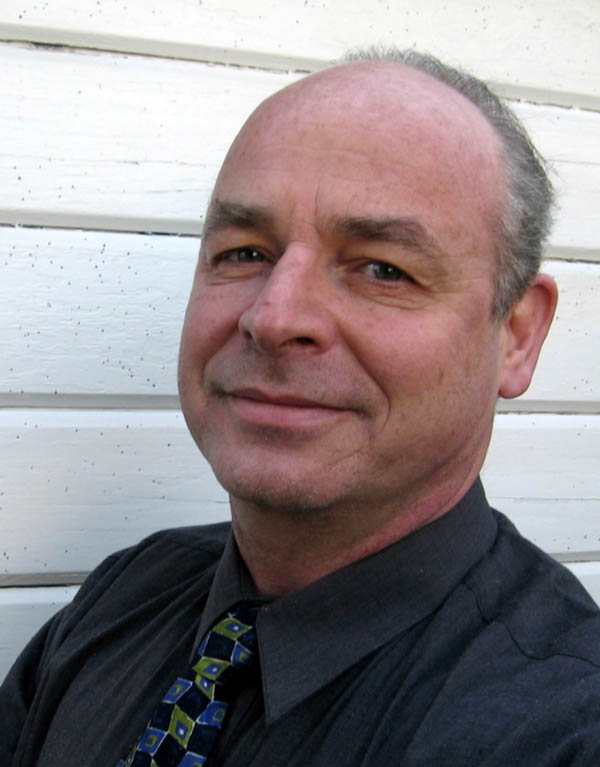
Blair Anderson, on the hustings 'canvassing for opinion'

Blair Anderson, on the hustings \
affiliation: Blair4Mayor.com

Friday, February 5, 2010

Canine Aggression and Community Safety

Breed specific legislation [BSL] is no answer to this apparent and ill-defined problem. BSL comes about from asking the wrong question. If a 'pit-bull' (insert dog of the moment) caused a problem, then (why not) ban them. Problem solved. The 'here and now' problem is best addressed by asking 'has what we are doing solved the problem or are we getting increased incidences?'. The research and thus 'answer' is instructive. The problem is, that research has not been carried out. Despite collecting tens of millions in dog fees no concrete research budget for social policy formulation is currently allocated. This is socially irresponsible. It is also poor administration and leads to the policy by panic to largely satiate the public thirst for simple and populist solutions.

We must commence any inquiry from first principles... What "do" we know? And a good place to start might be to first acknowledge that (1) Dogs provide a valuable role in society and (2) 600,000 dogs in New Zealand never bit anyone today.

That is why I asked Local Government Minister Hon Rodney Hide to consider an appropriate research budget at the New Zealand Companion Animal Conference in Auckland last year. There cannot be any good management without good measure.

To fail to do the hard stuff, we will be left to have policy made up on the fly as touted by those puppy-killing Invercargill City administrators and the balance of 'noisy' local government grifters who utterly depend on dog fees for their jobs.

As a both handler/trainer (http://nakeddog.co.nz) and social policy wonk, it has been my experience that the higher we build our fences and the shorter we keep dogs on lead the more we generate the very problem we set out to solve. As few as one in five dogs in New Zealand get their required daily walk (Massey, Palmerston North).

And we thought micro-chipping was going to help?

I would commend those 'tough on pit-bull' folk to consider this issue carefully. If they wish to get some good advice from a man with experience in such issues, World renowned behaviour expert and vet, Dr Ian Dunbar (http://dogstar.doglinks.co.nz) is addressing canine 'aggression' during his visit to Auckland and Christchurch this month.

One can only hope that he will attract the media attention that pit-bulls do.


--
Blair Anderson  ‹(•¿•)›
School fo the Naked Dog
50 Wainoni Road, Christchurch
ph nz  (643) 389 4065   nz cell 027 265 7219

Wednesday, January 6, 2010

Bono Goes Mild Green on Climate!

Bono in MaliImage by Oxfam America via Flickr

An Equal Right to Pollute (and the Polluter-Pays Principle)

http://www.globaldashboard.org/2010/01/04/the-best-news-on-climate-change-for-months-maybe/

"In the recent climate talks in Copenhagen, it was no surprise that developing countries objected to taking their feet off the pedal of their own carbon-paced growth; after all, they played little part in building the congested eight-lane highway of a problem that the world faces now.
One smart suggestion I’ve heard, sort of a riff on cap-and-trade, is that each person has an equal right to pollute and that there might somehow be a way to monetize this. By this accounting, your average Ethiopian can sell her underpolluting ways (people in Ethiopia emit about 0.1 ton of carbon a year) to the average American (about 20 tons a year) and use the proceeds to deal with the effects of climate change (like drought), educate her kids and send them to university. (Trust in capitalism — we’ll find a way.) As a mild green, I like the idea, though it’s controversial in militant, khaki-green quarters. And yes, real economists would prefer to tax carbon at the source, but so far the political will is not there. If it were me, I’d close the deal before the rising nations want it backdated."  -  BONO

heads up to Aubrey Meyer,
GCI.ORG.UK
57 Howard Road
LONDON E17 4SH
Ph 0208 520 4742

Wednesday, December 30, 2009

Seattle Mayor Thinks It's Time To Talk, Christchurch's Doesnt.

Seattle Mayor-elect supports marijuana legalization


Seattle Mayor-elect Mike McGinn as quoted in a recent radio interview on NPR:   "If every elected official who ever smoked marijuana voted to legalize it would probably be legalized in an instant. We recognize that, like alcohol, it's something that should be regulated not treated as a criminal activity and I think that's where the citizens of Seattle want us to go." 

Perhaps he should invite Mayor Bob Parker to come over and see what a  'SAFER CITY'  really looks like.... 

Could there be an honest admission in the future of our incumbent?

/Blair

Sunday, November 15, 2009

IMECHE C&C - implications for ChCh & NZ


The UK-based Institute of Mechanical Engineers [IMECHE] have just published a new report entitled: - CLIMATE CHANGE HAVE WE LOST THE BATTLE?

www.imeche.org/NR/rdonlyres/77CDE5E4-CE41-4F2C-A706-A630569EE486/0/IMechE_MAG_Report.PDF


In it they say: -

"The [UK] Government's targets and budgets have been set using a top-down approach based on the principle of contraction and convergence.

Effectively calling for a war-time economy,

IMECHE also say: -

"The Institution of Mechanical Engineers supports the principle of contraction and convergence."

From: Aubrey Meyer aubrey@gci.org.uk
 
Blair Anderson  ‹(•¿•)›
ph nz  (643) 389 4065   nz cell 027 265 7219
USA ph/cell/txt  213-3006861

Thursday, October 29, 2009

Govt urged to ease up on cannabis (>10 years ago)


Title: Evening Post article (NZ)
Published On: 1997-07-22
Source:The Evening Post (Wellington)
Fetched On:2008-09-08 14:11:32
Govt urged to ease up on cannabis

Outlawing cannabis is wrong and the Government must change strict cannabis laws, says a highpowered group of doctors and scientists.

The Drug Policy Forum Trust today released a discussion paper, offering four
new ways to control cannabis use.

It says freeing up the use of cannabis would have little adverse impact on public health it could even be "mildly positive" because alcohol and tobacco use would fall.

The group concluded that cannabis appeared to be harmless for about 90 percent of the people who used it, and that adverse effects were "substantially" less severe than those associated with excessive alcohol and tobacco use.

"We do not believe that cannabis is completely safe far from it" says the paper. "However, the health effects of cannabis are largely irrelevant to the problem of deciding which cannabis control policy to adopt.

"Indeed the more harmful we judge cannabis to be, the more important it is to exercise control over its distribution. Such control cannot be exercised in a prohibition environment, which in effect abdicates control to the black market."

The paper urges the Government to take control of the problem.

Forum director David Hadorn, a former Ministry of Health policy analyst, said while he expected the Government to try to push aside the paper, he doubted it would be ignored.

Its conclusions have angered and excited people on both sides of the cannabis debate.

Aotearoa Legalise Cannabis Party leader Michael Appleby, a Wellington lawyer, said the party had long supported partial prohibition. He was delighted with the paper.

He believed it would add momentum to the slow shift in attitudes towards cannabis and hoped the Goverment would be "brave" enough to listen.

But cartoonist Tom Scott, author of an antidrug book which was slated [criticized] by the forum, dismissed the conclusions as "bogus."

He said his primary concern was the teenagers whose lives were "wrecked" by cannabis. A law change would do nothing to help them.

A spokeswoman for Justice Minister Doug Graham said no plans existed to decriminalise cannabis. She had not seen the paper.

The forum, an independent group which says it is dedicated to raising the level of debate about illicit drug use in New Zealand, formed its conclusions after studying international and local research.

Its paper says in the past 25 years no "scholarly" body has endorsed cannabis prohibition. It blames prohibition for creating a lucrative and often violent black drugs market, for blocking effective education programmes, increasing the appeal of cannabis to young people, creating disrespect fot the law, breeding police corruption and oppressing young people and racial minorities.

It rejects arguments that freeing up cannabis laws would increase the number of people who use cannabis. It says any increase would be small and largely limited to adults.

The group says it is imperative that effective education programmes be developed in conjunction with any reform of the country's cannabis control system.

It is calling for public submissions on the paper and says it will then make a specific recommendation early next year.

Dr Hadorn released part of the paper at a public meeting yesterday and said it was time scientists and professionals had the courage to speak up about drugs and not allow "people who don't know what they are talking about to drum up hysteria."

A copy of the paper is available on the New Zealand Drug Foundation Internet website (http://www.nzdf.org.nz) as of today.

The forum trustees are Druis Barrett, Maori Women's Welfare League; Dr Robin Briant, Auckland Hospital senior physician, Dr Peter Crampton, Health Services Research Centre research fellow; Professor Fred Fastier, University of Otago emeritus pharmacology; Amster Reedy, Maori scholar, Professor Norman Sharpe, Auckland Medical School medicine department head; Helen Shaw, educationalist; and Professor Warren Young, Victoria University professor of law and assistant vicechancellor for research.

[Sidebar]

At a Glance

The Drug Policy Forum Trust's four alternative cannabis control systems:

* Total prohibition but with exceptions, as practice in Holland since 1976, where the Government agrees not to enforce the law under defined circumstances.

* Prohibition but imposing civil penalties, such as fines, rather than criminal penalties for minor offences, as operates in parts of Australia, Europe and America.

* Partial prohibition which would legalise limited possession and cultivation for personal use, but ban forprofit sale. This operates in Alaska, Spain, and Italy.

* Regulation in which cannabis would be treated much like alcohol and tobacco where growers would be license by a cannabis control board. Some personal cultivation could be permitted. No country operates this system.

* The forum rules out the option of free availability as insufficiently realistic to warrant discussion.

--

Who would have thought that National would preside over world first declassification 'Partial Prohibition' regulations and say nothing.

Blair Anderson ‹(•¿•)›

Social Ecologist 'at large'
http://mildgreens.blogspot.com (currently in dispute with Google who removed it!)

ph (643) 389 4065 cell 027 265 7219

"Rapid Increase In Illness" From The H1N1 Influenza Virus

CNN Reports President Obama Declares National Emergency To Deal With The "Rapid Increase In Illness" From The H1N1 Influenza Virus; Cannabis Science Continues Progress On Its Research To Show Cannabis Can Reduce Risk of Death from "Swine Flu"

COLORADO SPRINGS, Colo., Oct 26, 2009 -- Cannabis Science Inc. (NASD OTCBB: CBIS | Quote | Chart |News | PowerRating) an emerging pharmaceutical cannabis company, is urging that US government recognize that phytocannabinoid pharmaceutical products can help reduce Adult Respiratory Distress Syndrome (ARDS)-associated deaths from both the Avian and Swine Influenza infections, as President Obama declares a national emergency. President Obama signed the declaration late Friday and announced it Saturday. We urge readers go to: http://www.cnn.com/2009/HEALTH/10/24/h1n1.obama/index.html to read the whole story on the CNN website.

President Obama stated, "The 2009 H1N1 pandemic continues to evolve. The rates of illness continue to rise rapidly within many communities across the nation, and the potential exists for the pandemic to overburden health care resources in some localities." President Obama continued with, "Thus, in recognition of the continuing progression of the pandemic, and in further preparation as a nation, we are taking additional steps to facilitate our response." Cannabis Science, Inc. President & CEO Dr. Robert Melamede stated, "Clearly, there is little time to gear up the mass production of pharmaceutical cannabis products to meet the immediate needs of this national emergency. However, President Obama's new policy of federal tolerance of medical marijuana where is it legal under state laws, makes it possible for Cannabis Science to work with the medical marijuana patients and providers in some states to help develop products to meet patients' needs. If the situation is dire enough to justify calling it a "National Emergency", then surely medical ethics require that we work diligently with all relevant research." Dr. Melamede also deplored efforts in Los Angeles and other areas to close dispensaries and/or ban edibles. "It is hard to imagine a more wrong-headed approach or a worse time to deprive people of access to cannabis edibles. Again, we recommend, based on sound scientific principles, that medical marijuana users should switch to edibles if they come down with an influenza infection. We believe that the irritation associated with the pulmonary route, when a person has an influenza infection, may lead to unnecessary deaths. In contrast, oral administration may prevent many deaths. We hope that due to the magnitude of this pandemic threat, that the FDA will fast track our proposal." Please visit our website www.cannabisscience.com in the next few days as we will be posting a survey for those who encountered the H1N1 and other influenza symptoms and experiences. This Cannabis Science Survey will be designed to acquire anecdotal human data regarding the effects of Medical Marijuana on influenza infections. The company plans to monitor activity, collect data, and report findings in its reports to the FDA.

Cannabis Science H1N1 Swine Flu Formulation: Dr. Melamede explains, "We now know that the endocannabinoid system plays a critical role in maintaining human health. The human body produces Endocannabinoids on demand when they are needed. They help restore homeostasis (biochemical balance). The Cannabis plant produces Phytocannabinoids. When the human body has endocannabinoid deficiencies, it cannot effectively restore the healthy biochemical state needed to counter a particular illness. Phytocannabinoids from the Cannabis plant can replace the deficient endocannabinoid activity in the human body to restore a health-promoting level of cannabinoid activity. Cannabis Science will test its pharmaceutical products with FDA guidance and oversight to determine if it will reduce ARDS-associated deaths from both the Avian and Swine influenza infections." 


--
Blair Anderson  ‹(•¿•)›

Social Ecologist 'at large'
http://mildgreens.blogspot.com (currently in dispute with Google who removed it!)
http://blairformayor.blogspot.com
http://blair4mayor.com
http://efsdp.org

ph (643) 389 4065   cell 027 265 7219

Friday, October 23, 2009

It my cultural belief, in respect of use of the 'H'

To: afternoons@radionz.co.nz

that to preserve and protect the historical foundations of the South Island's pre-european history I respectfully petition for restoration of the 'H" in signage and reference to Whanaka, its region, its geographic features and the literature and language of its territorial authority and dominion of New Zealand... 

I premiss this petition noting the following authority;

 according to James MacKay, Assistant Native Secretary

THE ANCIENT HISTORY OF THE MAORI, HIS MYTHOLOGY AND TRADITIONS. NGA-TI-WHATUA [VOL. IX]

LETTER FROM JAMES MACKAY TO MR. H. SMITH, OCTOBER 1859

I was told that those wild or uncivilized Natives belonged to a tribe called Ngatimamoe, that they had been one of the strongest and most numerous of the aboriginal tribes of the Middle Island, but from the incessant wars which raged between them and the Ngaitahu they had become so reduced in numbers, that the remnant, amounting to about thirty (chiefly men) withdrew to the mountain fortresses, west of Lakes Hawea and Whanaka (Oanaka on charts), from which they could not be driven.

http://www.nzetc.org/tm/scholarly/tei-Whi09MAnci-t1-front-d3.html


--
Blair Anderson  ‹(•¿•)›

Social Ecologist 'at large'
http://mildgreens.blogspot.com (currently in dispute with Google who removed it!)
http://blairformayor.blogspot.com
http://blair4mayor.com
http://efsdp.org

ph (643) 389 4065   cell 027 265 7219


Support New Zealand's Call for Cool.

Sign On - The World Needs Us

RoundUp (of News) on the Weed