For a Seismic shift in the culture of Christchurch civics.
Christchurch Mayoral Election 2004, 2007, 2010, 2013, 2019, and 2025. Here to enrich-en the debate, every day in every way....
A "Cheeky Bugger" contesting for best practice governance.
The only candidate who has contested and debated all the issues, time and time again.
Blair Anderson, on the hustings 'canvassing for opinion'
or on making carbon disappear using the evidence based Gerry Brownlee Method.
consider this insight:
Vaclav Smil, an energy expert at the University of Manitoba, has estimated that capturing and burying just 10 percent of the carbon dioxide emitted over a year from coal-fire plants at current rates would require moving volumes of compressed carbon dioxide greater than the total annual flow of oil worldwide -- a massive undertaking requiring decades and trillions of dollars. "Beware of the scale," he stressed."
(and Gerry expects to be able to find a 'sealable' stable rock strata on these, the Shakey Isles.!! I wouldn't bet my beer on it... )
Of course the alternatives suggested thus far (ie: Contraction and Convergence) need just a bit more than promise and posturing...
"What sort of cowboy outfit are they running?" Christchurch based canine behavourist and trainer Natalie Perzylo comments on Invercargill's canine justice.
Following the media mis-charactersiation and inflammatory language of events surrounding two Neapolitan mastiffs released without authorisation 'by commandos' from the Invercargill Dog Pound, spokesperson for the highly popular website doglinks.co.nz, Ms Perzylo says this is really about the inadequacy of the ICC pound facilities to provide duty of care while due process is exercised.
The very graphic injuries and pitbull stereotyping on TV One's CLOSE UP item [17April] "Dog Vs Human, then What?" amounts to emotional blackmail when in the light of day the owner had no objection to the offending dog being euthanised and, being entitled to her day in court insisted, and rightly so, on civil procedure for its docile companion.
"The media portrayal of the extensive injuries from pitbull bites misdirects the public on this issue" says Blair Anderson of the School of the Naked Dog (nakeddog.co.nz). "NZ research earlier this year suggests it is Fox Terriers, Labradors followed by Chihuahuas that characteristically bite family members inside their own properties."
Anderson points out that we have created rules, regulations and enforcement where recent Massey conducted research suggests as much as four out of five of 400,000 or so registered dogs are not getting the required daily activity. "It shows we are increasingly keeping our dogs behind high fences and on short leads now. This is leading to the very problem we set out to solve". We were sold track and trace microchips and a national database of ownership as a politically expedient solution.
Our policy is fraught with downsides; people with smaller dogs are increasingly fearful of any larger dog on or off lead. This is made worse by ill-informed bred specific prejudice largely media driven.
Socialisation is key to public safety. Yes, some people need some help and guidance, while others only need confidence. Due to recent legislative changes and the increasingly dire consequences (huge fines, serious jail time, crippling veterinary fees, punitive pound fees and medical and legal costs) we now have a shortage of competent qualified and professional trainers and so many dogs, and families, in need.
Doglink's spokesperson Natalie Perzylo agrees with Anderson's streetwise canine knowledge further questioning how CLOSE UP failed to question Bill Watts?
"The ICC Environmental Services Director wants both dogs dead (presumably because he lost them both) yet according to media sources, the bites to the victims arm 'became infected' some time later suggesting they did not warrant prophylactic antibiotics, a precautionary measure taken first in any bite laceration scenario." No one wants to diminish the personal anguish of the victim here but lets enable discovery and ensure the truth of the matter. Courts are good at that. Cowboys aren't."
"Contrast that with TV One's shocking images of teeth punctures and open wounds. Where is the investigative journalism here? It is an emotive argument feed by moral panic and little substantiating fact. That is why we must leave it to due process. But if we are to learn something from this it may be that 'the policy' may be contributing to the problem and we need a more informed community for our companion animals."
"We know Kiwi's seek out guidance on dog behaviour, its such a popular topic" says Ms Perzylo who keeps a good tab on the SPCA's endorsed website. The traffic statistics prove "hundreds of New Zealander's are learning something canine everyday. Territorial authorities collect some 20 million dollars a year from dog fees alone, I am sure NZ's dog owners agree that education is better than intolerance and injustice."
The School of the Naked Dog commences the next of its eight week 90 minute socialisation [and bite inhibition] classes using the Ian Dunbar endorsed "KinderPuppy" curriculum at its Merivale, Christchurch venue Sunday the 26th. At nakeddog.co.nz/kinderpuppy is the opportunity to register, without obligation, anyone interested, be it Christchurch, Invercargill and Nationally, and we'll look to bringing the program to your district, school, or facility. ENDS
A form of cannabis could be used to build carbon-neutral homes of the future, university researchers in Bath said. A consortium, led by the BRE Centre for Innovative Construction Materials at the University of Bath, has embarked on a housing project to develop the use of construction materials made of hemp. ---- snip ---- Professor Pete Walker, director of the BRE Centre for Innovative Construction Materials, said: "We will be looking at the feasibility of using hemp-lime in place of traditional materials, so that they can be used widely in the building industry."We will be measuring the properties of lime-hemp materials, such as their strength and durability, as well as the energy efficiency of buildings made of these materials.
"Using renewable crops to make building materials makes real sense - it only takes an area the size of a rugby pitch four months to grow enough hemp to build a typical three-bedroom house."
Growing crops such as hemp can also provide economic and social benefits to rural economies through new agricultural markets for farmers and associated industries.
We'll there is a turn for the books. While everyone said it couldn't be done, shouldn't be done, and what about the kids! The University of Bath picks up where NZ academia just reject out of hand.... /Blair
Image via WikipediaRev. Charmaine Braatvedt / New Zealand June 2008
“Within the world wide Anglican Community Archbishop Rowan Williams has been very outspoken on the matter of climate change. He has called for deep cuts in carbon emissions on the basis of contraction and convergence. By this he means aiming at equal per capita emissions worldwide.
Clearly this would mean huge reductions for the rich countries. Even the evangelical churches of America seem to be voicing concern about this problem. I read recently that Rick Warren and a number of other evangelical leaders have come forward and formed the Evangelical Climate Initiative and signed a statement saying "human induced climate
change is real and calling on the Bush/ US government to urgently pass legislation establishing limits on carbon dioxide emissions which are widely believed to be the primary cause of human induced global warming. "
The statement goes on to say, “Christians must care about climate change because we love God the Creator and Jesus our Lord through whom and for whom the creation was made. This is God’s world and any damage that we do to God’s world is an offence against God himself.”
Inviting the Vanua to Join the Fight Against Drugs Monday, 19 January 2009 03:50 Police recognize that the fight against drugs will not make headway unless the community is involved. The success of the vanua policing concept in Tukavesi, Cakaudrove, where the community joined Police in clearing out marijuana farms and apprehending the growers, has shown that it is possible to stem out this growing problem. In the hopes of replicating the successes of Tukavesi, a team of senior Police officers led by Commissioner of Police Andrew Hughes will be in Keiyasi, Navosa to launch Vanua: Rai-Ki-Liu for the province on Wednesday, 12 July. Vanua: Rai-ki-liu is the result of a yearlong nationwide consultation to find a Community Policing model suitable for Fiji. Vanua:Rai-Ki-Liu is the way forward for the Fiji Police in partnership with the community. It is also symbolic of the culturally diverse communities that co-exist within Fiji at the present time. The Community Policing Review was undertaken in January 2005 in partnership between the Fiji Police and the Australia/Fiji Law and Justice Sector Program in which over 1,000 people from 33 villages, service providers (Government and non-Government) and police personnel across Fiji were consulted. The key findings of this review formed the basis for the Vanua Rai-Ki-Liu Model and it is focused on three key areas: the Youth of Fiji, the vanua, and squatter settlements (urban and rural). The model emphasizes a community with a common vision, working in partnership with a community justice approach. It also recognizes the key players in prompting fair and equitable justice for all across Fiji. The United Nations estimates that 160 million people worldwide use cannabis with a significant number of its users experiencing panic attacks, paranoia and other “psychotic symptoms” while under the influence. The UN are also concerned that newer, more potent strains of cannabis are equally threatening as heroin and cocaine and that it can no longer be dismissed as soft and harmless as many proponents have previously purported. The head of the United Nations Office on Drugs and Crime (UNODC), Antonio Maria Costa warns that countries with inadequate drug policies get the drug problem they deserved. “With cannabis-related health damage increasing, it is fundamentally wrong for countries to make cannabis control dependent on which party is in government,” he said. “The cannabis pandemic like other challenges to public health requires consensus, a consistent commitment across the political spectrum and by society at large.” Mr. Costa maintains that the considerably more potent forms of marijuana available today than a few decades ago, shows that it was a mistake to dismiss it as a “soft drug” earlier on. “Today the harmful characteristics of cannabis are no longer that different from those of other plant-based drugs such as cocaine and heroin,” he said. In the last two years, drug-related offences reported to Police have fallen steadily from 433 in 2001 to 417 in 2003. For the period 2004 and 2005, this number fell even further to a steady 312 cases for both years - a decrease of 33 percent from 2003. While these numbers represent a significant decline, anecdotal evidence shows that the holdings of marijuana growers remain a concern. Tied to marijuana use are the realities of violent crimes and mental health problems affecting our young people who have abused the drug on a continuous basis. It is a fact that those who have at some point taken and/or trafficked in marijuana commit the majority of sexual offences and violent robberies. Force Psychologist Lorraine Meades agrees that marijuana is anything but a “soft” drug. “An increasing problem in Fiji and other countries is young people presenting at psychiatric hospitals with Drug Induced Psychosis from using marijuana,” she said. “Marijuana is anything but a ‘soft’ drug. It can have serious health impacts such as lung cancer and chronic bronchitis but it can also have serious psychiatric impacts.” Ms. Meades said that an acute drug-induced psychosis (irrational thoughts and fear) brought on by marijuana usually lasts a few days. Once stabilized (which usually requires medication) the person must never use marijuana again. This psychotic episode has sensitized the brain and further marijuana use can result in another acute episode or, of more concern, a serious psychotic illness. “In some people marijuana can precipitate an existing predisposition to a psychotic illness and bring forward an episode of schizophrenia or manic depression. This can become a lifelong illness,” Ms. Meades said. The shift from leisurely consumption of this hallucinogenic drug to commercial scale farming in the last decade shows that rural Fiji is on the cusp of a major shift in its agro-based economy of traditional roots crops and kava to cannabis. Under-development and scarcity of basic infrastructure such as roads, water and electricity coupled with limited access to markets for their products, has given rise to the simple economics of supply and demand for the marijuana producers in the highlands. Keiyasi is known as a major supply area for marijuana. The unforgiving terrain, limited access to many of the villages and settlements in this part of the country and general disenchantment of the people who live here, has created the ideal environment for this odious operation. The return to an honest day’s work for those to ply this trade needs more than the intervention of Police with the help of the community. Government along with the relevant non-Government and faith-based organizations also need to be actively involved in turning the tide on drugs.
Image via Wikipedia National Party Emmissions Trading Scheme Review announced.
The MfE led ETS consultation was a sham and an embarrassment to due process. (and if the Nats had half the integrity they profess - arses should be kicked)
When Nick Smith spoke prior to the election at the Canterbury historic "Provincial Chambers" a well known proponent if C&C discreetly asked Nick about National's follow the leader on climate initiatives noting that ^Great Britain and *Australia seemed to be preferred notables.. upon which Nick agreed. (see ^UK Climate Bill and *Garnaut - C&C "adds-up")
So we can look forward to a conservative precautionary "Contraction and Convergence" new deal on climate response getting the a just and equitable evaluation in a fair and considered "select committee" hearing under National. With ACT on board, I can see "property rights" defining the climate solution space, and welcome Rodney's considered input.
United Future's Peter Dunne will no doubt consider the 'constitutional basis' for C&C and see the common revenue neutral merits, (C&C at least provides numerate analysis) and centrist values while Nick has ostensibly, and publicly, agreed "that any framework Australia and Great Britain adopts National should seriously consider...". (see http://www.gci.org.uk)
While I laud this politically inspired reevaluation... questions should be seriously asked as to how we so consistently 'ignored' what Treasury officials described (at the Christchurch ETS consultations)as the "conscience behind the policy". Such overt and exclusionary prejudice to a good idea must be fodder for a good story, as I for one could not support a now former Prime Minister who at the Christchurch launch of ETS still had never heard of C&C.
“C&C is supported not only by China, India, and most African nations, but also by the European Commission and the European Parliament, which endorsed it in 1998. I can’t imagine that the developing nations would accept any plan that did not eventually converge on equal per-capita emission rights. Although C&C is the fair solution, it is not “ideological.” It is dictated not only by fairness but also by practicality and realism: The nations of the world will agree on nothing less. ” see American Physical Society – October 2008 http://www.aps.org/units/fps/newsletters/200810/upload/october08.pdf
The Climate Issue 're-visiting' must be accompanied by a full and unfettered public engagement elsewise any proposed solution will fail to bring onboard those whom it is designed to protect.
/Blair Anderson,Republican Party of New Zealand, Shadow Spokesperson on Environment and Climate Change. cell 027 2657219
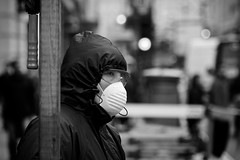
Scientists have used the novel idea of a "pollution vest" to determine that individual exposure to air pollution can harm a person's heart health beyond whatever damage that community-level exposure can cause. WEDNESDAY, Nov. 12 (HealthDay News) -- By Amanda Gardner / HealthDay Reporter
"The challenge of air pollution is that what people are exposed to and what most studies talk about . . . rarely represent the micro environment of what's in your house," explained American Heart Association spokesman Dr. Russell Luepker, Mayo professor of epidemiology and community health at the University of Minnesota, Minneapolis.
"People have been working to try to get individual monitors that people can wear, so they can know what people are really inhaling as opposed to what they might be inhaling a mile away from where the monitor was."Image via Wikipedia
"People shouldn't panic, but it's important that people be aware that air pollution is a contributor to cardiovascular disease," said Robert Bard, co-investigator of a study that was presented Wednesday at the heart association's annual scientific sessions, in New Orleans. "Things people can do include supporting legislation for cleaner air initiatives and, if somebody has cardiovascular disease, they may consider avoiding exposures to air pollution during peak levels, because this can potentially be a trigger for a cardiovascular event. Things everyone can do include limiting commutes and contributing less to production of pollutants."
Previous research has drawn an association between fine particulate matter air pollution and an increased risk for cardiovascular events.
It's unclear however, if daily changes in particulate matter might affect the heart and if ambient (outside) sources of air pollution have different effects than non-ambient (inside) sources.
The authors of this study were able to determine just that.Image by marielito via Flickr
Sixty-five participants in the cardiovascular sub-study of the Detroit Exposure and Aerosol Research Study (DEARS) wore vests outfitted with monitors to collect both personal and community-based levels of air pollutants on five consecutive days during both the summer and the winter. All volunteers were nonsmokers and lived in nonsmoking households in three different areas of Detroit.
"We specifically looked at the pollution they were individually exposed to," explained Bard, who is a research associate in the division of cardiovascular medicine at the University of Michigan Medical Center in Ann Arbor.
The average person in the study experienced increased blood pressure (1.6 millimeter of mercury) and a narrowing of blood vessels related to personal air pollution within two days of exposure. These changes could lead to heart attacks, strokes and heart failure, the authors stated.
Broader, community exposure was linked with poorer blood vessel functioning, but not Image via Wikipediahigher blood pressure. The air pollution measured was within parameters considered acceptable by the U.S. Environmental Protection Agency.
And almost one-third of volunteers were exposed to secondhand smoke, even though they were nonsmokers living in nonsmoking households.
According to the study authors, a 10-microgram per cubic meter increase in air pollution at the community level leads to a 1% chance of dying the day after exposure, amounting to about one extra death per day in an area of 1 million to 5 million people.
SOURCES: Robert L. Bard, M.S., research associate, division of cardiovascular medicine, University of Michigan Medical Center, Ann Arbor; Russell V. Luepker, M.D., American Heart Association spokesman, Mayo professor, department of epidemiology and community health, University of Minnesota, Minneapolis; Nov. 12, 2008, presentation, American Heart Association annual scientific sessions, New Orleans
Proponent for enabled health promotion, fiscal responsibility, education, growth management, traffic and transportation, public safety and the environment.
This site is a exercise in liberal democracy.
If you want to know more, Google "Blair Anderson" with a keyword of your concerns. ie: 'climate', 'science', 'justice', 'particulates' or 'drugs'.
In the civic dialog surrounding leadership for Christchurch being largely mediated by the hard copy editors of the forth estate, new media; the Internet is the natural vehicle for independent thinking, participation and coordination. (ie: see http://canterburyissues.org.nz/)
The 2025 local body elections Christchurch will 'mandate' a direction for the cities foreseeable future from the collective fog of signals it sends in electing the head of the Council table.
Such is your mayoral vote. Your vote for reason is a vote for rating equity, for affordable and accessible services and for intergenerational equity; [and more].
If you wish to cast a vote that will deliver beyond 'business as usual' outcomes then consider;
The writer's 50 years of examination of our drug laws has evolved into a comprehensive, long-term effort to bring about meaningful reform of drug policy on many levels. The principal objectives of this effort are:
Are these worthy aspirations? Worthy of the future Mayor of Christchurch?
It was these very aspirations that sent Seattle drug policy law proponent Roger Goodman of the King County Bar Association to the Washington State Senate. Seattle, [And subsequently to Washington DC as a Federal Senator] Our Sister City, is away ahead of us here in Canterbury, (despite Mayor Moore's 'Time to Talk').
I see my symbolic stand for Mayor as raising awareness of the uncivil consequences of drug prohibition and how getting it right has an evidential billion dollar dividend, all that represents.
Send YOUR signal to the top of the table.
Vote Blair4Mayor.raising awareness of the consequences of drug prohibition and just about everything else others are either (a) intellectually bereft or (b) to compromised by being locked into the paradigm of failure to discuss.